

ABA Therapy vs. Occupational Therapy
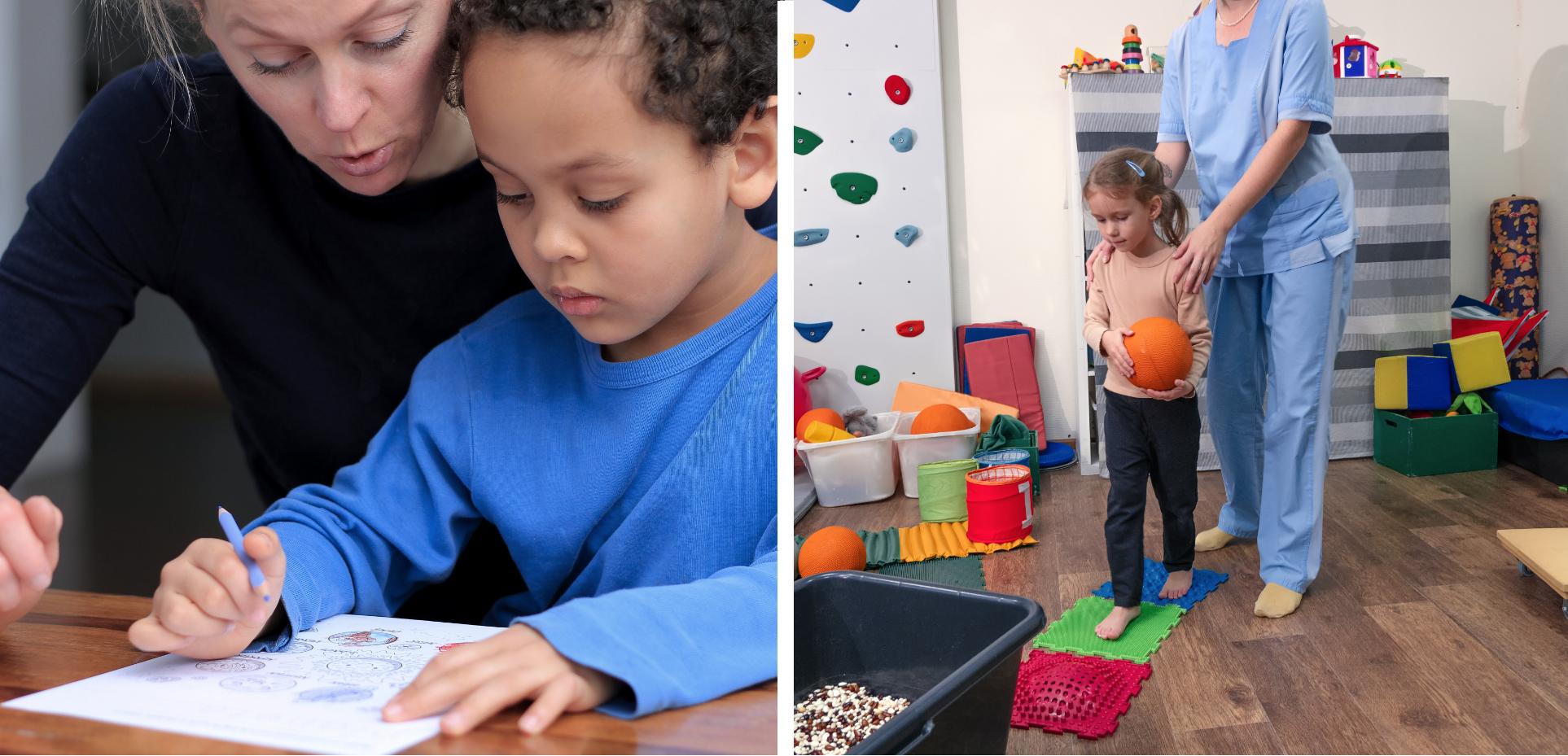
Applied Behavior Analysis (ABA) and Occupational Therapy (OT) are evidence-based approaches utilized in early childhood development. ABA zeros in on teaching specific behaviors and reducing problematic ones – mainly for children with autism. OT targets daily functional skills, motor coordination & sensory processing to help kids manage their everyday activities (e.g., buttoning a shirt or holding a pencil). Parents comparing the two deserve a clear picture of what each therapy addresses.
Children with autism get referred to both therapies fairly often, which makes sense as the goals of each approach can work together to support a child’s overall development. Knowing how ABA and OT differ and where they overlap gives parents a foundation for deciding what their child needs most.
What is ABA Therapy?
ABA (Applied Behavior Analysis) therapy uses principles of learning and behavior to improve social and communication skills in children with autism. Its primary purpose is to increase positive behaviors and reduce harmful ones, enhancing overall functioning and independence.
Key principles of ABA include positive reinforcement to encourage desired behaviors, structured sessions for consistent learning, and task breakdown, where complex tasks are divided into manageable steps. These techniques help children learn new skills and enhance overall progress through individualized approaches. Your child’s ABA therapy sessions will be thoughtfully designed to meet their specific needs.
Individualized treatment plans in ABA therapy are crucial for addressing your child’s unique needs. Measurable outcomes ensure progress is tracked and adjustments are made to promote continuous improvement. This progress will be reviewed with you, as parents/caregivers, during your regularly scheduled parent training sessions.
These sessions are typically on a weekly, biweekly or monthly cadence, based on your child’s therapy hours and insurance. Although you can meet with your child’s BCBA as often as needed to discuss behaviors you are seeing in your child.
This tailored approach maximizes effectiveness and fosters meaningful, long-term developmental gains for your child.
What is Occupational Therapy?
Occupational Therapy (OT) focuses on helping individuals develop or regain skills needed for daily activities to enhance independence. It supports children by improving their sensory processing and motor skills, enabling them to perform tasks such as dressing, eating and communicating, thereby promoting greater autonomy and a higher quality of life.
Key components of Occupational Therapy (OT) include:
- Sensory Integration: This helps your child process and respond to sensory information, improving their ability to tolerate and respond to stimuli such as touch, sound, and movement.
- Motor Skill Improvement: Developing fine and gross motor skills to enhance tasks such as writing, buttoning clothes, or balancing.
- Adaptive Strategies: Teaching techniques to manage daily activities to support independence.
- Cognitive-Behavioral Support: Assisting with attention, organization, and social interactions to improve overall functioning.
OT goals focus on boosting independence; for example, they may include improving handwriting by enhancing fine motor control or increasing hand-eye coordination for tasks such as eating or using utensils.
Key Differences Between ABA and OT
Focus Areas
ABA therapy focuses on addressing behavioral and communication challenges by using reinforcement and structured interventions to promote positive behaviors.
Occupational Therapy (OT) targets physical, sensory, and daily living skills to improve motor skills, sensory processing, and independence in activities such as self-care and school tasks.
Methodologies
ABA therapy relies on data-driven methods and uses ongoing assessments to track behavior and measure progress. Techniques include positive reinforcement, task analysis, discrete trial training, and natural environmental training.
OT uses hands-on activities and exercises, such as fine-motor tasks and sensory integration techniques, to support physical, sensory, and cognitive growth.
Goal Setting and Progress
In ABA, goal setting is highly individualized, focusing on measurable behavioral changes, such as improving communication or reducing specific behaviors. It is important to focus on improving behaviors to allow your child to receive the information being taught through ABA and other therapies. Progress is tracked through data collection and analysis, and strategies are adjusted as needed.
In OT, goals are centered around improving functional skills like self-care, motor abilities, and sensory processing. Progress is measured through observation, skill development, and functional assessments, with a focus on increased independence in daily activities.
ABA Example:
If your child struggles with communication and social interaction, their therapist may use structured sessions to teach basic conversational skills through repetition and positive reinforcement, like rewarding the child for making eye contact or using words to express needs.
OT Example:
If your child has difficulty with fine motor skills, such as tying their shoes, an OT therapist would use hands-on activities to improve dexterity and hand-eye coordination, promoting independence in daily self-care tasks.
Can ABA and OT Work Together?
Yes, ABA and OT complement each other by addressing different aspects of your child’s development. ABA focuses on behavior and communication, while OT improves physical, sensory, and daily living skills. Together, they provide a holistic approach for your child, promoting social, cognitive, and functional growth and encouraging greater independence and overall well-being.
ABA therapists and occupational therapists collaborate by addressing both behavioral and functional needs. For example, while your child’s ABA therapist focuses on communication skills, an OT works on sensory integration to help your child tolerate sensory input. Together, they enhance social interactions, self-care abilities, and overall independence.
It is very common and expected for your child’s BCBA and OT to coordinate care and work together to address your child’s overall needs. Combining OT and ABA therapies offers a comprehensive approach that addresses both behavioral and functional challenges. ABA enhances communication and behavior, while OT improves physical, sensory, and daily skills.
This integrated strategy supports long-term progress by promoting overall independence, social participation, and adaptive functioning, fostering lasting developmental gains. Combining therapy strategies will ensure your child is set up for success in their daily lives and as they grow.
Factors to Consider When Choosing Between ABA and OT
Assessing a child’s unique needs is crucial for both ABA and OT. ABA focuses on behavioral and communication challenges, while OT addresses physical, sensory, and daily living skills. Designed assessments ensure that each therapy targets specific developmental areas, promoting effective, individualized treatment and optimal outcomes for your child.
ABA is more beneficial for children with autism struggling with communication or behavioral issues, such as improving social interactions or reducing tantrums. OT is more beneficial for children with fine motor delays or sensory processing issues, like difficulty with dressing, writing, or tolerating certain textures or sounds. Professional guidance will help your family make informed decisions by assessing your child’s specific needs.
Therapists can recommend ABA for behavioral and communication challenges, or OT for motor, sensory, and daily living skills. By considering your child’s strengths and areas for growth, professionals ensure the most effective therapy approach. It is common for both therapy strategies to have techniques that overlap with each other. The assessments can determine which modality will be the right fit for your child.
Real-World Success Stories from ABA and OT
With ABA, positive outcomes include improved communication and social skills, reduced challenging behaviors and enhanced overall independence. We see children communicating effectively, which helps reduce problem behaviors and tantrums. Allowing them to process information more easily and feel regulated.
In OT, outcomes include better motor coordination, sensory processing, and self-care abilities, such as improved handwriting or dressing skills, leading to increased daily independence and confidence in various life activities.
ABA therapy enhances daily life by improving communication, social behaviors, and self-regulation, leading to better interactions and independence. OT impacts daily life by developing fine motor skills, sensory processing, and self-care abilities, such as dressing and eating, fostering increased independence, confidence, and participation in everyday activities.
How to Choose the Right Therapy
ABA and OT work in different areas of development, and they complement each other when a child needs support across multiple domains. ABA targets behavioral and communication challenges – the kind of work that helps a child build communication skills and reduce behaviors that disrupt daily life. OT mainly focuses on sensory processing, fine motor skills and daily routines like writing or getting dressed.
For parents sorting this out, your child’s specific struggles are the best place to start (there’s no better guide than what you’re already observing at home). A child who has difficulty with communication may benefit most from ABA, while a child who struggles with school-related fine motor work may thrive in OT. Many children, especially those on the autism spectrum, end up in both.
It is important to note that ABA and OT overlap in the skills they target. Ask any therapist you meet with which specific areas they plan to work on, because that overlap can sometimes work in your child’s favor. A good clinician will help you figure out what your child needs most.
Contact Autism Learning Collaborative for Personalized Therapy
For expert guidance and personalized therapy options, contact Autism Learning Collaborative. Our team provides personalized ABA services to support your child’s growth and independence. We also collaborate with multiple OT providers, should you need recommendations for both ABA and OT therapies.
Reach out today via our website to learn how we can help your child thrive in a supportive, caring environment.